Table of Contents
- Overview: Rethinking What “Winning” Means in Sports Betting
- Building a Betting Framework: Edges, Markets, and Discipline
- Bankroll Mechanics: Turning Chaos Into a Controlled System
- Parlays With a Purpose: When Combining Legs Actually Makes Sense
- Choosing and Using Betting Sites and Online Casinos Strategically
- Protecting Yourself: Recognizing When Sports Betting Stops Being Healthy
- Conclusion: Treat Sports Betting Like a Repeatable Craft, Not a One-Time Score
- FAQ
Overview: Rethinking What “Winning” Means in Sports Betting
Expert Insight:
According to onlinesportsbetting.pro, BetUS is highlighted with one of the largest welcome promotions—a 125% bonus up to $3,125—alongside a full suite of products including slots, table games, live dealer options, and sports betting features (https://onlinesportsbetting.pro/). (onlinesportsbetting.pro)
Most sportsbetting content focuses on hot picks, bonus codes, or oversized parlay wins. That may be exciting, but it is not how serious bettors think about the game. Sustainable betting is about process, not luck: controlling stakes, exploiting small edges, using multiple books, and knowing when not to bet at all.
This article takes a different angle from typical beginner guides. Instead of walking through every bet type, it focuses on how to build a repeatable framework that can survive thousands of wagers. You will see how to:
- Use betting sites and online casino platforms strategically, not impulsively.
- Treat parlays as tools with specific roles, not lottery tickets.
- Manage your bankroll with simple, mechanical rules.
- Spot when sports betting is drifting into harmful behavior and how to respond.
The goal is not to promise unrealistic profits. It is to help you turn sports betting into a controlled, data-driven hobby where you understand both your risk and your limits.
Building a Betting Framework: Edges, Markets, and Discipline
Before you compare any betting site, you need a framework for how you will approach sports betting itself. Most recreational players operate on vibes: they bet when they are excited and increase stakes when they are losing. A framework replaces emotion with rules.
Start with three pillars: edge, markets, and discipline.
- Edge:An edge is a small probability advantage over the line being offered. It can come from better information, faster reactions to news, or sharper models. Resources like The Action Networkand Unabatedexplain how closing line value, market moves, and pricing models work in real markets.
- Markets:You do not need to bet every game. Many serious bettors focus on a narrow slice where books are less efficient: derivative props, smaller leagues, or niche totals. Sites such as OnlineSportsBetting.pro, BettingPlanet, and SportsHandle guidesgive you a sense of how different markets behave and where public money tends to cluster.
- Discipline:Decide before the season what percentage of your bankroll each standard bet (“unit”) will be, and write down rules for when you can increase or decrease that size. Discipline means you follow the rules even when you feel like ignoring them.
Think of this as your personal betting playbook. Sportsbooks will constantly present you with new odds, boosts, and parlays; your framework decides what actually makes it onto your slip.
Bankroll Mechanics: Turning Chaos Into a Controlled System
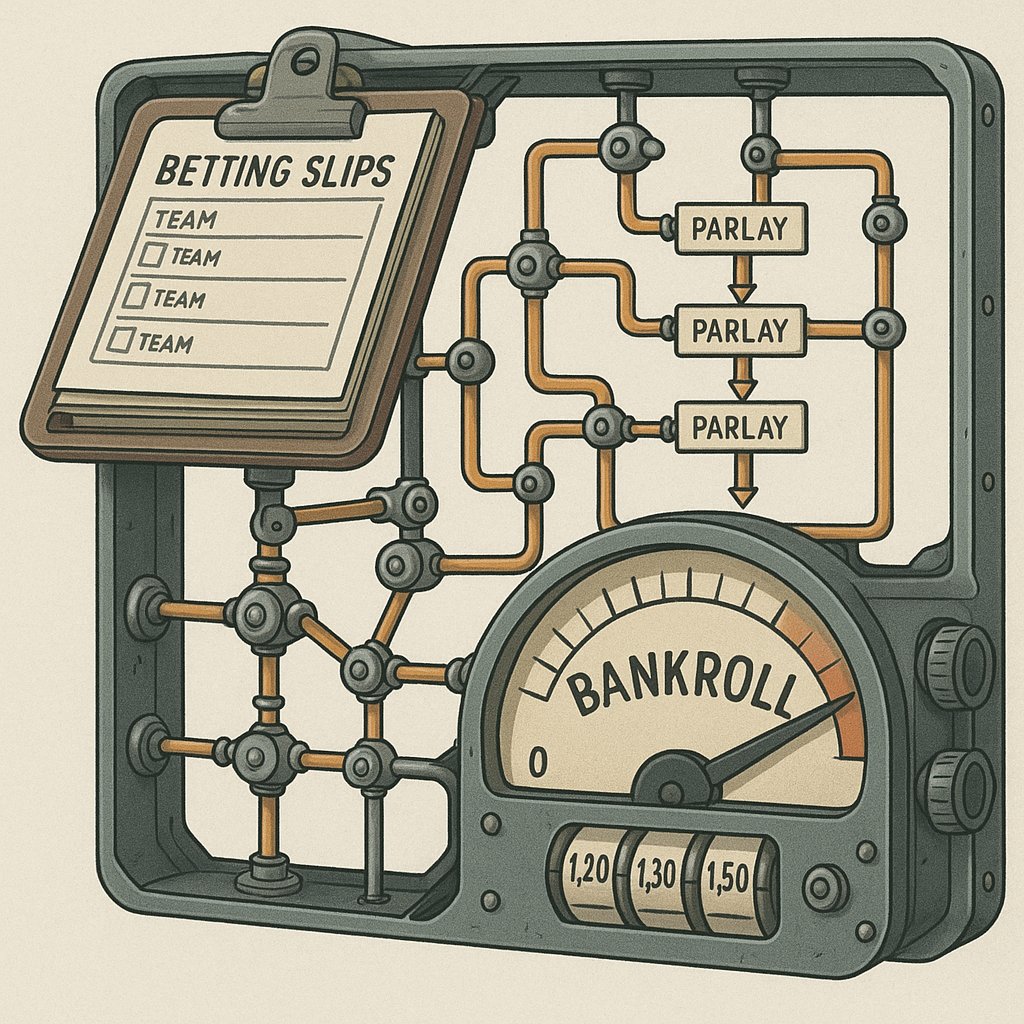
Bankroll management is the part of sports betting that most players know they should care about, but rarely systematize. Without a system, swings feel personal; with a system, swings are math.
Here is a compact approach that fits both straight bets and parlays:
- Define the bankroll:Treat your betting bankroll as completely separate money from rent, savings, and bills. If you cannot afford to lose it without changing your life, it is not a bankroll.
- Set a unit size:Many disciplined bettors risk 0.5%–1% of their bankroll per standard wager. If you have $1,000 set aside, a 1% unit is $10. High-risk multi-leg bets like a parlay usually get less than one unit.
- Cap daily exposure:Decide how much total you can risk in a single day or slate (for example, 5–7 units). This keeps you from overreacting during big slates or chasing late-night action.
- Adjust gradually:Recalculate your unit only at predefined checkpoints (for example, every month or after a 25% change in bankroll), not after every win or loss. This prevents tilt-driven stake changes.
A system like this works across different platforms: whether you are on a sharp sportsbetting app, a softer betting site, or even a hybrid online casino and sportsbook. The key is that your risk per event is controlled and predictable, no matter how the interface tries to nudge you toward bigger stakes or flashier parlays.
Parlays With a Purpose: When Combining Legs Actually Makes Sense
Parlays dominate ad campaigns because they are high-margin products for sportsbooks and visually exciting for bettors. Guides from outlets like SportsHandleand Action Network’s parlay educationexplain the math: you are multiplying payouts, but also compounding the bookmaker’s edge.
That does not mean you must avoid every parlay. It means you need clear, intentional use cases:
- Price-driven parlays:Some bettors only build parlays when each leg individually has an estimated edge. The parlay is just a way to scale a calculated advantage—not a random mix of picks.
- Correlation-aware builds:Books often restrict obvious correlations (like same-player props and related game totals), but edges still exist in less obvious relationships. Education from sites like Goal’s parlay betting coverageand SportsHandle’s sportsbook comparisonscan help you understand how different operators price and limit these combinations.
- Entertainment parlays:You might allocate a tiny portion of your bankroll (for example, 1–2% of your total per week) solely for long-shot fun tickets. That portion is budgeted entertainment, not part of your serious strategy.
The key is that parlays fit into your overall plan. If you find that most of your volume has quietly shifted from straight bets to multi-leg slips, or that you are constantly raising stakes on parlays after losing, your system has been hijacked by emotion. Reset back to your framework before the damage compounds.
Choosing and Using Betting Sites and Online Casinos Strategically
Once you have your internal rules, you can evaluate external platforms more intelligently. The best approach is rarely to use a single sportsbook or online casino for everything; it is to build a small portfolio of accounts, each with a defined role.
When you compare operators, think in terms of use-cases instead of brand names:
- Price shopping:Different betting sites will hang slightly different lines. Sites that review and aggregate odds, such as The Action Network’s reviews, NewJournal’s sportsbook roundups, and lists of top platforms from independent reviewers, can show you where price gaps tend to appear.
- Market depth:Some books excel at player props, others at niche leagues or live markets. Resources like SportsHandle’s best sports betting sites guideand BettingPlanetbreak down which operators support specific markets and sports.
- Casino crossover:Many sportsbooks now integrate casino games. That can be convenient, but it also makes it easier to drift from structured sports betting into fast-paced slots or table games. If you use an online casino within a sportsbook, consider a separate sub-bankroll and strict time limits for those games.
- Promotions and bonuses:Welcome offers, parlay boosts, and odds boosts can be valuable if they fit your existing strategy. Detailed breakdowns from sites like OnlineSportsBetting.proand SportsHandle’s 101 contenthelp you understand rollover requirements, eligible markets, and hidden terms.
If you are ready to compare operators directly and open your next account, you can start by visiting this recommended betting site, then cross-check its odds, markets, and bonuses against at least one or two other sportsbooks before committing serious volume.
Protecting Yourself: Recognizing When Sports Betting Stops Being Healthy
A sustainable approach to sportsbetting is not just about profit; it is also about health. Fast apps, constant live betting, and casino crossover products can all increase the risk of compulsive behavior.
Warning signs that betting may be turning into a problem include:
- Repeatedly chasing losses or increasing stakes after a bad night.
- Hiding betting activity from friends or family or feeling ashamed of your play.
- Using credit cards or borrowed money to fund deposits.
- Neglecting work, relationships, or health because of betting or casino play.
Medical and psychological resources, such as the guidance found in Healthline’s overview of gambling addiction, stress that problem gambling is a health condition, not a lack of character. Many licensed sportsbooks now offer built-in tools: deposit limits, time-out periods, and self-exclusion options. Use them proactively—before you feel out of control.
Outside of betting, simple lifestyle choices help you stay sharper and less impulsive at the screen. High-sugar diets and sleep deprivation can both fuel emotional decision-making; resources such as low-sugar nutrition guideshighlight small changes that can improve long-term focus and mood. The point is not to become an athlete yourself, but to treat your mind and body like the core tools of your betting strategy.
Conclusion: Treat Sports Betting Like a Repeatable Craft, Not a One-Time Score
Modern sports betting gives you more tools, markets, and platforms than ever: sharp odds screens, rich education sites, multi-leg parlay builders, and integrated online casino products. That power cuts both ways. Without structure, it is easy to drift into oversized bets, constant parlays, and unhealthy habits.
If you build a clear framework—defining your edge, markets, bankroll rules, and platform roles—you can turn sportsbetting into a controlled, long-term hobby. Parlays become deliberate tools instead of default choices, betting sites become price and market providers instead of impulse machines, and your bankroll becomes a budgeted resource instead of a moving target.
From here, your next steps are practical: write down your personal rules, audit your current accounts and habits against them, and only then expand to new sportsbooks or casino apps that fit your plan. The scoreboard you should care most about is not last night’s parlay, but whether you are still playing with clear rules, stable mental health, and money you can genuinely afford to risk months and years from now.
FAQ
Q:
What’s the main difference between casual gambling and disciplined sports betting?
A:Disciplined sports betting treats wagering like a long-term investment process, not entertainment or a quick score. It uses a defined bankroll, consistent stake sizing, data-driven decisions, and strict limits instead of emotional or impulse bets.
Q:
How should I structure my bankroll for sustainable sports betting?
A:Decide on a fixed amount of money you can afford to set aside just for betting and separate it from everyday finances. Then divide it into small units (often 0.5–2% per bet) so no single loss can seriously damage your overall bankroll.
Q:
Why is it important to have accounts at multiple sportsbooks or online casinos?
A:Different sportsbooks post different odds, lines, and promotions on the same games. Having multiple accounts lets you shop for the best price, reduce the house edge, and avoid relying on a single platform’s limits or features.
Q:
What does it mean to have a repeatable betting process?
A:A repeatable process is a step-by-step routine you follow before every wager—research, line shopping, stake sizing, and logging bets. It removes guesswork, makes your decisions more consistent, and helps you evaluate what’s working over time.
Q:
How can I keep sports betting from turning into a gambling problem?
A:Set hard limits on time and money, predefine your maximum daily or weekly loss, and never increase stakes to chase losses. Use the responsible gaming tools sportsbooks provide, like deposit limits, timeouts, and self-exclusion, and stick to your written plan instead of your emotions.
Related Reading
- Sports Betting in 2026: How Serious Fans Turn Picks, Parlays, and Sites Into a Repeatable System
- Sports Betting Playbook: How Modern Bettors Build Systems, Not Just Parlays
- Sports Betting in 2026: How to Build a Clean, Repeatable Process Instead of Chasing Hype