Table of Contents
- Overview: What Parlays and Multi-Leg Bets Really Are
- Parlay Fundamentals: Odds, Payouts, and Risk Trade-Offs
- Same-Game Parlays: Correlation, Hidden Tax, and Smart Uses
- Multi-Leg Betting Structures: Cross-Game Parlays, Round Robins, and Props
- Practical Strategy: Using Parlays Without Letting Risk Spiral
- FAQ
Overview: What Parlays and Multi-Leg Bets Really Are
Expert Insight:
According to CBS Sports (https://www.cbssports.com/betting/news/parlays/), a parlay bet combines multiple wagers into one slip where all selections must win, which raises the potential payout but also the risk since a single losing leg voids the entire bet. They note that parlay odds are typically calculated by combining the odds of each individual leg—often by multiplying them—such that three -110 spread picks, for example, would yield approximate parlay odds of +586 (excluding stake). (
www.cbssports.com)A parlay is a single wager that combines two or more individual bets (legs). Every leg must win for the parlay to cash. If any leg loses, the entire parlay loses. This simple rule is what makes parlays so attractive and so dangerous: you trade a low probability of winning for a potentially large payout.
In modern sportsbetting, parlays now come in several flavors:
- Traditional parlays: Multiple bets from different games or markets, usually spreads, totals, and moneylines.
- Same-game parlays (SGPs): Multiple legs all from one game, often mixing spread/total alternatives, player props, and game props.
- Multi-leg props and combo bets: Player-stat or event-based parlays across different games or even different sports.
Online sportsbook operators and every major betting site aggressively promote parlays and SGPs because they produce significantly higher long-term profit margins than single bets. As a bettor, your edge is understanding how those multi-leg bets are priced, how correlation works, and when a parlay structure fits your goals instead of just amplifying risk.
Parlay Fundamentals: Odds, Payouts, and Risk Trade-Offs
At the core of any parlay is simple probability math. Each leg has an implied chance of winning. When you combine legs, the true probability of winning the parlay is roughly the product of those individual probabilities (assuming they are independent), while the payout is based on multiplying the odds of each leg.
Consider a basic example with three NFL sides, each priced at -110:
- Single bet at -110: risk 1 unit to win ~0.91 units.
- Three-leg parlay of -110 legs: risk 1 unit to win roughly 6 units (exact price varies by book).
The key trade-off:
- Single betsgive you a higher chance to win each wager and smoother bankroll swings.
- Parlaysdrastically lower your chance of cashing but offer a bigger payout if you hit all legs.
Books also build in extra margin on parlays. First, each leg often has standard juice (like -110). Second, when those legs are combined, the book’s parlay calculator rarely gives you the mathematically fair price. The more legs you add, the more this hidden edge compounds.
For bettors, this means multi-leg betting should be used with a clear purpose:
- To consolidate correlated opinions or narratives into one ticket.
- To risk small amounts for occasional big scores, while accepting a low hit rate.
- To structure exposure across a slate when you only want to risk a fixed amount.
What it should not be is an automatic “boost button” every time you like multiple games. Without discipline and realistic expectations, parlays can quietly accelerate losses even if your underlying handicapping is decent.
Same-Game Parlays: Correlation, Hidden Tax, and Smart Uses
Historically, sportsbooks did not allow parlays from the same game because many combinations are correlated. Correlation means the outcome of one leg meaningfully affects the probability of another. For example:
- Team -6.5 full game spread and Team -3.5 first-half spread are strongly correlated.
- QB over 275.5 passing yards and favorite’s team total over are positively correlated.
- Under 41.5 total points and both starting RBs over rushing attempts can be correlated if you expect a slow, run-heavy game.
When FanDuel introduced branded Same Game Parlays around 2019, they solved the correlation problem with technology and pricing. Books now use data providers and in-house models to:
- Identify which legs are allowed together.
- Estimate the joint probability of all legs.
- Apply an additional “tax” beyond normal juice to protect their margin.
In practice, this means:
- You rarely receive the full multiplier that an independent parlay would deserve.
- The more correlated your legs, the more aggressively the price is shaded.
- Some combos are blocked entirely when the book cannot model them safely.
How to think strategically about SGPs
- Build around a clear game script: Start with a narrative like “favorite wins comfortably in a high-scoring game” or “defensive slugfest, both teams run heavily.” Choose legs that logically fit that script instead of randomly stacking overs.
- Avoid redundant legs: If one leg already captures your thesis (e.g., alternate spread -13.5), adding a pile of highly similar legs (like multiple correlated player overs on the same team) may not give you fair compensation for the extra risk.
- Keep leg count reasonable: SGPs become lottery tickets when you stack 6–10 correlated props. Consider 2–4 legs that tightly match your story instead of chasing 100-1 payouts every time.
- Compare SGP price to singles: When possible, check what your parlay would pay if you bet the same legs individually and multiplied true prices (or used simple American-to-decimal conversions). Big discrepancies signal heavy SGP tax.
Same-game parlays can be fun tools in sportsbetting, especially for marquee events where you have a strong read on pace, usage, and coaching tendencies. Treat the SGP tool as a way to express a nuanced game script with small, controlled stakes rather than as your main betting strategy.
Multi-Leg Betting Structures: Cross-Game Parlays, Round Robins, and Props
Beyond simple parlays and SGPs, modern betting technology supports a wide range of multi-leg structures. Each has a specific purpose and risk profile.
1. Cross-game parlays
These are traditional parlays that combine legs from multiple games or sports:
- Three NFL spreads on Sunday.
- NBA moneylines plus NHL totals.
- Soccer sides across multiple leagues.
Because many of these legs are closer to independent events, the pricing is often more straightforward than same-game parlays. Still, books usually offer a margin edge on the combined price.
When they make sense:
- You have strong opinions on a small number of games and want to risk a limited amount for a higher payout.
- You’re comfortable with volatility and accept a low hit rate.
- You use them sparingly alongside regular straight bets, not as a replacement.
2. Round robins
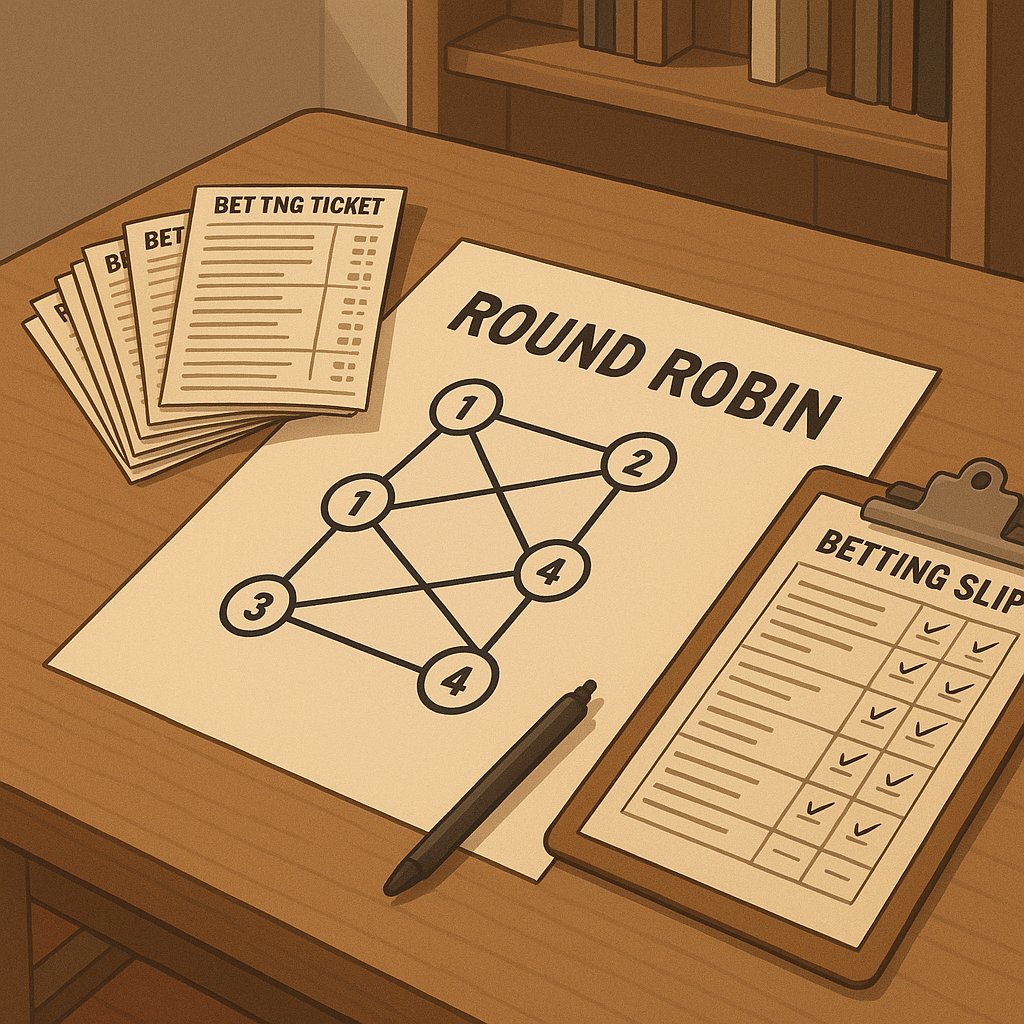
A round robin automatically creates a series of smaller parlays from a larger set of picks. For example, if you select four teams (A, B, C, D) and choose a “2-team round robin,” the book builds all 2-leg combinations:
- AB, AC, AD, BC, BD, CD
This structure:
- Spreads out risk compared with a single 4-leg parlay.
- Can still win money or limit losses if only some of your picks win.
- Costs more up front because you are effectively placing many parlays at once.
Round robins are best used when you like a cluster of sides/totals but don’t want a “all-or-nothing” outcome. They are still multi-leg betting, so they amplify variance relative to flat straight bets.
3. Player-prop and stat-based combos
Books now offer cross-game player combos and multi-leg props:
- Two players each to score a touchdown.
- Three NBA players to hit 3+ threes.
- Multiple pitchers to record a certain number of strikeouts.
These markets are especially popular because they feel like fantasy lineups merged with betting. The key is to remember that:
- Props often have higher juice per leg than sides/totals.
- Public bias toward overs can inflate prices.
- The parlay structure magnifies the impact of that extra juice.
To use multi-leg props intelligently, anchor them to clear edges (usage, injuries, matchup specifics) instead of simply linking star-player overs because they are fun to root for.
Practical Strategy: Using Parlays Without Letting Risk Spiral
Parlays and same-game parlays sit at the intersection of entertainment and risk. They can add excitement to a slate, but they can also quietly erode your bankroll even if you are a competent handicapper. A few practical guardrails can keep them in check.
1. Size parlays smaller than straight bets
Given the lower probability of winning, many disciplined bettors:
- Keep parlay stakes to a small fraction of their typical straight-bet size (for instance, 10–25%).
- Limit the number of multi-leg tickets they fire on a single day or week.
This way, a cold stretch of parlays does not dominate overall results.
2. Avoid “plugging leaks” with long shots
One of the most common mistakes in sportsbetting is responding to losses by chasing with bigger, longer parlay tickets. This compounds variance and usually accelerates losses. Instead:
- Pre-define how many parlay or SGP bets you’ll make in a given week.
- Stick to that limit regardless of short-term results.
- Track your performance separately for singles vs. parlays to see where your actual edge lies.
3. Be selective with boosts and promos
Betting sites and online casino platforms frequently offer odds boosts, insurance, or bonus bets tied specifically to parlays and SGPs. These can be useful if:
- The boost applies to a bet you already wanted to place.
- Terms and rollover requirements are clear and acceptable.
- You understand that “insurance” promos can still encourage overly risky behavior.
Don’t build a bet just to qualify for a boost; start with your best ideas and see which promos genuinely improve the expected value.
4. Standardize your approach
Instead of improvising new multi-leg strategies every weekend, create simple rules:
- Maximum leg count for parlays and SGPs you’re willing to bet seriously.
- Preferred types of legs (e.g., sides/totals you can handicap well vs. thin prop markets).
- Clear goals: entertainment value, small long-shot exposure, or structured correlation plays.
For bettors who want a controlled way to experiment with multi-leg betting at a regulated platform, you can explore an established betting sitethat offers a wide range of parlay and same-game parlay tools, along with detailed betslip breakdowns.
5. Keep the big picture in mind
Over a long horizon, sportsbooks have a higher hold percentage on parlays and SGPs than on straight bets. Use them as a spice, not the main course of your portfolio:
- Let most of your volume live in markets you understand best.
- Use parlays for carefully chosen narratives or small high-upside shots.
- Regularly review your results; if parlays are consistently dragging down your ROI, scale them back.
Parlays, same-game parlays, and multi-leg props are powerful tools that can either enhance or undermine your overall betting strategy. The difference comes down to structure, discipline, and an honest understanding of the math behind the excitement.
FAQ
Q:
What is the main difference between a parlay and a same-game parlay (SGP)?
A:A standard parlay combines bets from different games or markets, while a same-game parlay stacks multiple picks from a single matchup. SGPs are more heavily managed and priced by sportsbooks because the legs are often correlated, which can reduce the true odds compared to a traditional multi-game parlay.
Q:
Why do sportsbooks promote parlays so heavily?
A:Sportsbooks like parlays because the house edge compounds as you add more legs. Most bettors focus on the big potential payout and underestimate how much the true probability of winning drops, which makes parlays highly profitable for the book over time.
Q:
How does correlation affect parlay and SGP value?
A:Correlation means the outcome of one leg makes another leg more or less likely to hit. When you stack positively correlated legs (like a quarterback’s passing yards over with his receiver’s yards over), the true odds are better than a simple parlay calculator suggests—but books usually adjust prices to protect against that edge.
Q:
How many legs should I include in a parlay or multi-leg bet?
A:Fewer, more carefully chosen legs generally give you a better chance of a reasonable return than chasing massive, long-shot tickets. Many sharper bettors cap parlays at two to four legs and focus on finding fair or mispriced lines instead of piling on extra outcomes just to inflate the payout.
Q:
Are there any smart ways to use parlays and SGPs?
A:Yes—think of them as tools for targeted risk rather than lottery tickets. You can use small-stake parlays to leverage specific game scripts, combine edges you’ve identified across markets, or turn correlated props into a modest multiplier, instead of relying on 8–10 leg slips that almost never cash.