Table of Contents
- Overview: Why NBA Line Shopping Matters More in 2025
- Step 1: Build a Multi-Sportsbook Setup Before the Games Start
- Step 2: Use Injury and Lineup News to Time Your Line Shopping
- Step 3: Compare NBA Odds Efficiently Across Books
- Step 4: Decide When a Difference Is Worth Betting
- Step 5: Integrate Live Betting and Cash-Out Into Your Workflow
- Step 6: Apply Line Shopping to Parlays Without Letting Risk Explode
- Step 7: Track Results and Protect Your Bankroll Like a Pro
- Mindset: Keeping NBA Line Shopping From Turning Into Retail Therapy
- FAQ: NBA Line Shopping and Practical Money-Saving Questions
- Conclusion: Turn Line Shopping Into a Repeatable NBA Edge
Overview: Why NBA Line Shopping Matters More in 2025
Expert Insight: According to melbet.com, MelBet is primarily positioned as a bookmaker offering thousands of sports events to bet on—ranging from cricket, tennis, Formula 1, horse racing, the FIFA World Cup, and the Olympics—alongside casinos, slots, and other gambling games on a single platform (https://melbet.com/). (melbet.com)
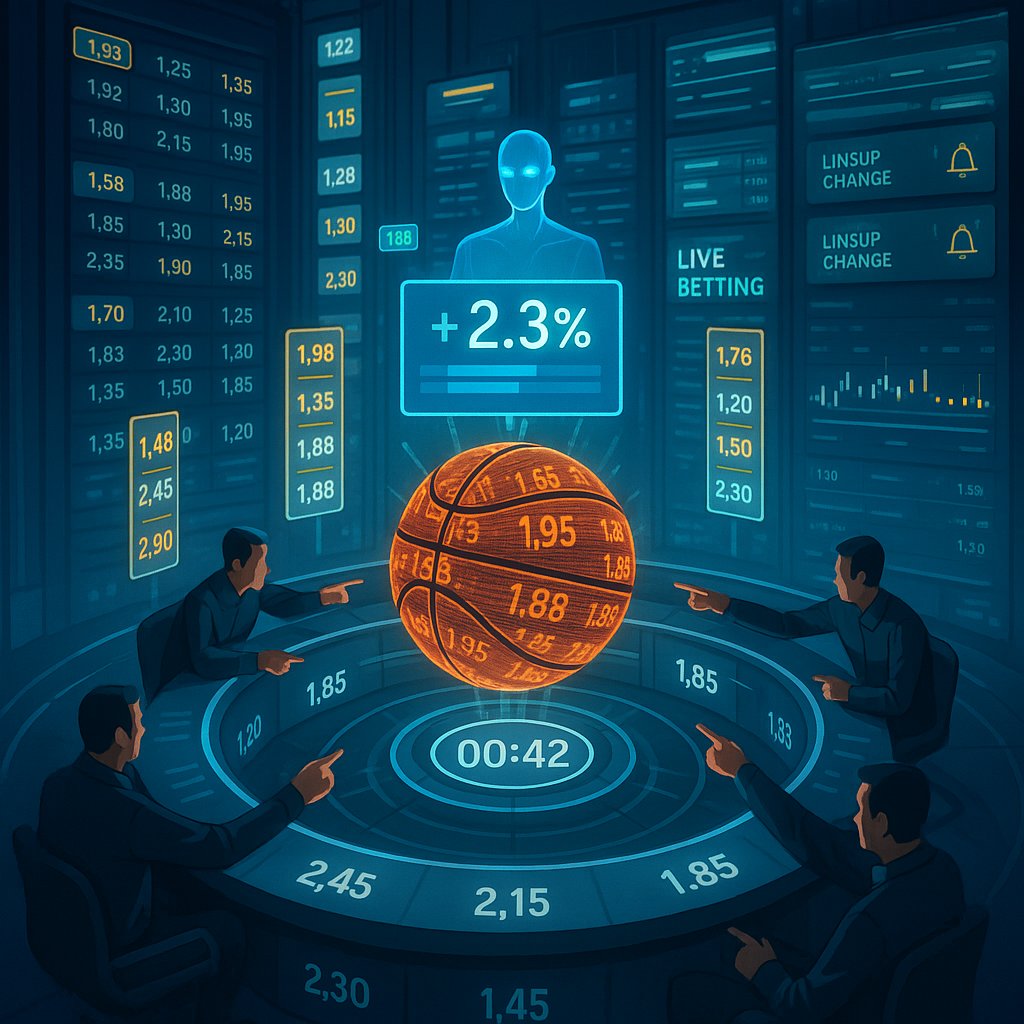
NBA sides and totals move faster than ever in 2025. Injury news breaks on social, data feeds update instantly, and every major betting site is using algorithmic pricing. That speed creates tiny mispricings across books—often just half a point or a few cents of juice—that add up to real money over hundreds of bets.
The challenge is not understanding the theory. It is building a repeatable workflow that fits real life: checking odds across multiple apps, reacting to lineup changes, and deciding when a price difference is actually worth acting on. Done well, line shopping can put you ahead of casual sportsbetting users without adding much risk.
This guide focuses on a concrete NBA-specific workflow in 2025: which tools to use, when to check them, how to react to moves, and how to plug it all into your bankroll rules. It also covers how this approach differs for single bets versus a parlay, and how to avoid turning efficient line shopping into inefficient overbetting.
Step 1: Build a Multi-Sportsbook Setup Before the Games Start
Line shopping only works if you can actually place bets where the best numbers live. That means setting up several accounts before the NBA slate begins instead of scrambling at tip-off.
Use sites like Sportshandle’s mobile sportsbook coverage and its state-specific pages (for example, Pennsylvania) to confirm what is legal where you live, what apps exist, and which ones offer competitive pricing and promos.
Then:
- Open 3–5 strong NBA books. Include at least one sharp-leaning brand, one promo-heavy book, and ideally one international-style operator with deep markets. Comparison lists like TheSportsGeek’s NBA sportsbooks guide can help you prioritize.
- Fund each account modestly. Spread your bankroll across books so you can fire quickly wherever the best price appears, without waiting on transfers.
- Verify KYC early. Complete identity checks and payout methods during quiet hours, not five minutes before a national TV tip.
- Turn on key notifications. Many apps let you get alerts for odds boosts, line changes, or favorite team games—useful for time-sensitive NBA moves.
If you want a single additional betting site to compare markets against your existing books, you can explore options via this partner link: betting site. Treat any new book as one more data point in your line-shopping toolkit rather than a place to chase action.
Step 2: Use Injury and Lineup News to Time Your Line Shopping
In NBA sportsbetting, the line you get often depends less on your opinion and more on when you bet it relative to injury news. 2025 pricing engines re-grade odds within seconds of key lineup shifts, so your workflow needs to revolve around predictable news windows.
For daily injury and rotation context, RotoWire’s NBA lineups page is invaluable. It shows projected and confirmed starting fives, status tags (probable, questionable, out), and last-minute changes.
Build a timing routine around the league’s rhythm:
- Morning (for overnights and early value): Scan injury reports for stars listed as questionable. If you have strong reads and the market is slow to react, you may grab early numbers—but expect volatility.
- Afternoon (re-check news and odds): As more shootaround updates come in, some questionables firm up toward playing or sitting. This is often when the first serious line moves start.
- 90–45 minutes before tip: This is your prime time. Starting lineups lock, beat writers confirm statuses, and you can re-check odds right when books repost or adjust.
- Final 15 minutes pre-tip: Treat as cleanup. You are not trying to bet every game; you are checking targeted spots where you expect misalignment between books.
Your line shopping workflow should explicitly include these pre-tip checkpoints, with clear goals at each stage—scan news, compare prices, and only then decide whether a bet is worth placing.
Step 3: Compare NBA Odds Efficiently Across Books
Once your accounts are live and your timing is synced to the news cycle, the core of line shopping is simple: compare prices side by side and take the best number within your limits. The key is to do this quickly and consistently.
For a real-time odds overview, tools like Action Network’s NBA odds screen or their wider NBA hub are helpful. They let you see which books are dealing -2.5 versus -3, or 226.5 versus 227, and where the juice sits.
In practice, build a simple comparison routine:
- Pick your target markets first. Focus on full-game spreads, totals, and a few core props (like points, rebounds, or assists for stars). Do not try to scan every obscure bet.
- Check the consensus line. Use an odds screen or average line to understand where the market “should” be.
- Identify outliers. Look for books that are off the consensus by half a point or more, or that offer better juice on the same number.
- Confirm limits and rules. Before firing, make sure the stake you want is allowed and that house rules (like overtime inclusion for totals or props) match your expectations.
You can complement this with data-driven viewpoint content. For example, Action Network’s AI betting guide explains how models interpret odds and market movement, which helps you recognize when a move is just random noise versus sharp information being priced in.
The practical goal: be able to look at a matchup, check three to five books in under a minute, and instantly see where your edge—however small—actually lives.
Step 4: Decide When a Difference Is Worth Betting
Not every difference is worth acting on. A disciplined NBA line shopping workflow needs thresholds so you avoid betting just because books disagree by a sliver.
Use simple, repeatable rules:
- For spreads: Prioritize key numbers and half-points around them. Going from -3 to -2.5 is often meaningful; from -7 to -6.5 typically matters less, though it can still add up over volume.
- For totals: A 1-point improvement on widely bet numbers (like moving from 226.5 to 225.5 on a game with strong pace and offensive metrics) is usually worth pursuing.
- For moneylines: Decide a minimum price swing. For example, you might require at least a 10-cent difference between available prices (e.g., -125 vs -135) to justify moving your bet.
- For props: Because holds are higher, be selective. Look for both a better number and better juice, not just one or the other.
Anchor everything in expected value and long-term thinking. A single half-point rarely changes the outcome of a single bet, but over hundreds of NBA plays, those half-points are the difference between a small loss and a sustainable profit.
This is where your personal risk profile and time budget matter. If you are serious and volume-heavy, a strict threshold (say, 1% edge or better) makes sense. If you are more casual, you might limit line-shopping decisions to larger discrepancies and marquee games to avoid decision fatigue.
Step 5: Integrate Live Betting and Cash-Out Into Your Workflow
Pre-game line shopping is only half the story in 2025. Live betting and early cash-out features add another layer of opportunity—and risk. Sites like MelBet highlight this with distinct pre-match (Line) and in-game (Live) tabs, dynamic odds, and the option to sell your bet early.
To keep live betting from wrecking your discipline, treat it as a structured extension of your pre-game plan:
- Pre-define your live triggers. For example, you might only bet live if an early foul issue hits a star, if pace is drastically different from projections, or if an injury mid-game changes rotations.
- Shop live lines across books. Some operators react faster than others; occasionally one will lag, offering a +4.5 when others are at +3.5. Quickly grab the best number, but only inside your staking rules.
- Use cash-out just like a line-shopping tool. Compare the effective price of cashing out (what profit or loss you lock in) to the odds you could get by re-betting the other side elsewhere. If the market likes your current position more than the cash-out offer does, it often pays to hold.
- Protect against tilt. Set a hard live-betting cap (e.g., no more than 25% of your daily unit volume) so you do not undo the value of careful pre-game line shopping in a single quarter.
In other words, treat live betting as another chance to buy mispriced numbers, not as impulsive in-game entertainment. The same math applies: you still need a better line than the market is generally offering, and you still need your bankroll rules to remain intact.
Step 6: Apply Line Shopping to Parlays Without Letting Risk Explode
A lot of modern NBA sportsbetting activity centers on the parlay: multi-leg combos of spreads, totals, and props that promise big payouts. Line shopping matters here too, but you must recognize how risk multiplies.
Resources like TheSportsGeek’s NBA strategy content and broader NBA betting guides explain why parlays generally favor the house. Each leg is already priced with a margin; stacking them multiplies the hold.
Still, if you are going to build a parlay:
- Line shop each leg individually. Place your combo where the overall price is strongest, even if that means using a different book than your default.
- Avoid duplicate exposure. Do not mirror the same correlated positions in singles and a parlay unless that risk is intentional and pre-budgeted.
- Limit parlay size. Fewer legs (two to four) typically keep the variance more manageable, especially if each leg has been carefully line-shopped.
- Compare parlay pricing. Some books offer parlay boosts or better default payouts; check whether the boosted parlay actually beats the combined prices you could get elsewhere.
For many NBA bettors, a smarter approach is to treat the parlay as a small entertainment slice of their portfolio, while using line shopping on straight bets to drive any realistic expectation of long-term profit. That balance keeps variance, and emotions, in check.
Step 7: Track Results and Protect Your Bankroll Like a Pro
Even the sharpest NBA line-shopping workflow fails if you ignore bankroll management. You need to know not just whether you are “winning,” but whether your edges are real and sustainable.
Start with simple but strict rules:
- Fixed unit sizing. Risk a consistent percentage of your bankroll per standard NBA bet (for example, 0.5–1%). Adjust only when your bankroll meaningfully changes.
- Separate budgets for single bets and parlays. Parlays and high-variance props should use smaller units than your best straight bets.
- Daily and weekly loss limits. Decide in advance when you will stop, even if you feel like “you’re due.” This helps avoid emotional chasing across multiple apps.
Track your performance by market, book, and bet type. Many operators offer internal stats dashboards—MelBet, for example, emphasizes account analytics so you can observe balance swings and bet history. You can supplement that with your own spreadsheet or tracker app.
A practical tracking setup might include:
- Book name
- Market (spread, total, moneyline, prop, parlay)
- Line taken (and consensus line at the time, if possible)
- Stake, result, closing line, and notes (e.g., “beat close by 1 point”)
Over time, you want to see consistent “closing line value” (getting better numbers than the final market). That is often a stronger signal of the effectiveness of your line shopping than short-term wins or losses, which are heavily driven by variance.
Mindset: Keeping NBA Line Shopping From Turning Into Retail Therapy
With multiple apps, constant odds updates, and nightly NBA slates, it is easy for line shopping to morph from disciplined optimization into a kind of retail therapy. Health research on shopping behavior—like reports from Healthline’s discussion of retail therapy—shows that browsing and buying can temporarily improve mood but can also lead to regret and overspending.
The same patterns show up in sportsbetting and online casino environments:
- Endless scrolling. Cycling through lines and boosts just to feel engaged, even with no clear plan.
- Impulse bets. Clicking into a new prop or same-game parlay simply because it is prominently displayed.
- Justification after the fact. Rationalizing hasty bets as “value” once the money is already down.
To keep your workflow healthy:
- Pre-commit to a slate plan. Decide how many games you care about and which markets you will target before you open your apps.
- Set time limits. Give yourself defined windows (for example, 20 minutes pre-slate, 5 minutes per game) for line shopping to avoid getting lost in endless options.
- Separate evaluation from betting. It can help to first review odds and mark potential plays, then take a brief break before actually placing them.
The goal is to keep line shopping as a financial decision process rather than an emotional coping strategy. That discipline improves both your long-term results and your overall relationship with betting.
FAQ: NBA Line Shopping and Practical Money-Saving Questions
How many sportsbooks do I need to line shop effectively?
For most NBA bettors, three to five active accounts are enough to capture the majority of meaningful price differences without overwhelming you. Start with a mix of national brands and competitive niche books sourced from places like Sportshandle and TheSportsGeek’s NBA sportsbook reviews.
Does line shopping matter if I only bet small amounts?
Yes. Even if you bet small, consistently taking +3 instead of +2.5 or -110 instead of -115 compounds over time. Think of it like getting better prices on groceries every week—it adds up across a full season.
Can I use line shopping for same-game parlays?
To a point. You can compare base leg numbers and payouts across books, but each operator prices same-game parlays differently. Focus on the overall value of the package, and keep stakes small. Straight bets usually benefit more directly from line shopping.
How do AI-based odds tools change the value of line shopping?
AI-driven pricing can reduce obvious mispricings, but it also makes markets more reactive to news and volume. As guides like Action Network’s AI sports betting overview note, this can create short windows where one book moves faster than another, which is exactly when a disciplined line shopper can still find edges.
Is there a role for online casino play in a line-shopping-focused strategy?
Online casino games are usually higher house-edge and do not benefit from line shopping in the same way sports markets do. If you enjoy casino play, treat it as entertainment with a separate, capped budget. Keep your serious edge-seeking effort focused on sportsbetting, where price comparison and market timing can meaningfully shift your long-term expectation.
What if I do not have time to check odds constantly?
Condense the workflow. Focus on key pre-tip windows (like 60–30 minutes before games), concentrate on a small number of games or markets, and only act on clear discrepancies. It is better to apply line shopping well on a few bets than to apply it poorly across many.
Conclusion: Turn Line Shopping Into a Repeatable NBA Edge
NBA line shopping in 2025 is not about chasing every tiny move; it is about building a simple, repeatable workflow that consistently gets you better numbers than most of the market. With multiple sportsbooks, structured injury and lineup monitoring, efficient odds comparison, defined value thresholds, and strong bankroll rules, you transform small pricing gaps into a durable edge.
Applied over a full season, that discipline can be worth far more than any single hot streak, parlay, or promo. Treat line shopping as a core skill in your sportsbetting toolkit—one that quietly saves and earns money every time you click “place bet,” not just when the final score goes your way.