Read more in our Complete Guide to Parlays, Same-Game Parlays &.
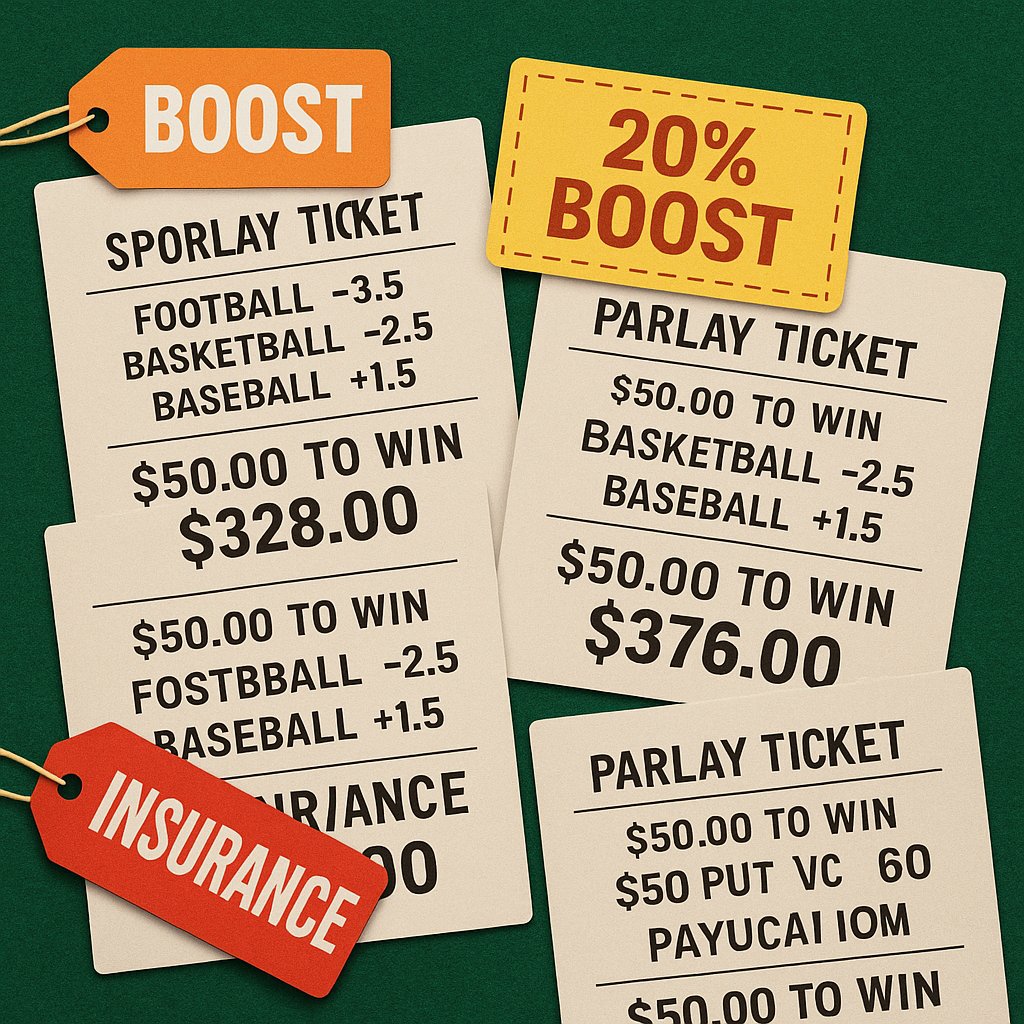
Table of Contents
- Overview: Why Parlay Value Changes From Book to Book
- Step 1: Standardize Prices Before You Compare Parlays
- Step 2: Benchmark Parlay Payouts Using Calculators and Sims
- Step 3: Adjust for Promotions, Boosts, and Insurance
- Step 4: Compare Value by Parlay Type and Sport
- Step 5: Build a Simple, Repeatable Parlay Comparison Routine
- Conclusion: Treat Parlay Shopping Like Line Shopping
- FAQ
Overview: Why Parlay Value Changes From Book to Book
Expert Insight:
According to www.dimers.com, parlay bets (also called accumulators or combo bets) combine multiple legs into a single wager where all legs must win for a payout, creating higher potential returns but also higher risk: https://www.dimers.com/parlay-picker. The site recommends beginners approach parlays cautiously and suggests using Dimers’ Parlay Picker and daily best parlay picks—built from in‑depth analysis—to tailor strategies to specific sports like the NFL, NBA, and NHL. (www.dimers.com)
Parlay pricing is one of the quietest but biggest edges a betting site has over casual bettors. Two sportsbooks can offer the exact same legs at noticeably different payouts, and once you factor in parlay boosts, insurance, and same-game parlay rules, the gap can become huge.
For sportsbetting and even players who primarily come from the online casino world, understanding how to compare parlay value is one of the fastest ways to improve returns without increasing risk. Instead of building bigger, riskier combos, you simply make sure each ticket is priced as fairly as possible.
This article focuses on practicalparlay comparison: how to convert prices, benchmark expected payouts, and leverage tools like parlay calculators and sims so you know which book is truly giving you the best deal on a specific parlay.
Step 1: Standardize Prices Before You Compare Parlays
Before comparing parlay value across sportsbooks, you need all legs on a common scale. Different books show American, decimal, or fractional odds, and some shade prices more heavily on favorites or underdogs.
To standardize prices for clear comparison:
- Convert every leg to implied probability.This strips out the formatting and lets you see how much margin each book is charging.
- Compare leg by leg across books first.If one book is consistently a few cents worse on each side, your parlay there will be systematically underpriced.
- Be careful with same-game parlays (SGPs).SGP odds are not just the product of individual legs. Books inject extra hold into the combo, so you need to compare the full ticket, not just each market.
Once everything is on an implied-probability basis, you can quickly see which book is offering the best underlying price for each component of your parlay before you even look at boosts or insurance.
Step 2: Benchmark Parlay Payouts Using Calculators and Sims
After standardizing the individual legs, the next question is simple: what shouldthis parlay pay at a fair book, and how far off are the real lines?
Two types of tools are especially useful here:
- Parlay calculators.A parlay calculator lets you plug in decimal or American odds for each leg and instantly see the combined payout for a given stake. You can run the same leg set with prices from each sportsbook, then log how the final returns differ.
- Odds/betting-odds calculators.These convert between formats and, more importantly, show implied probability. Once you know the fair probability of each outcome (from a market average or sharp book), you can compare real payouts to a theoretical no-vig version.
For more advanced sportsbetting analysis, simulation tools and prop-model sites can estimate the true probability of a multi-leg outcome. When those probabilities are available, you can directly compare:
- Expected value (EV) = True win probability × Payout − Loss probability × Stake
- EV at Book A vs EV at Book B for the same parlay
The key is to use calculators to turn “this feels like a nice price” into precise, comparable numbers.
Step 3: Adjust for Promotions, Boosts, and Insurance
Raw odds only tell part of the story. Sportsbooks compete for parlay handle with promotions that directly change your effective price:
- Profit boosts and stepped-up parlays.A 20% or 40% profit boost significantly changes the true payout, especially on longer tickets. Compare the boostedpayout at one book vs the unboosted payout at another before deciding where to place the bet.
- Parlay insurance and “no-sweat” promos.If a site refunds your stake in bonus bets when one leg loses, that safety net raises your effective EV compared with a book that offers nothing on near misses.
- Same-game parlay boosts.Many books offer SGP-specific perks for NFL, NBA, or soccer. It’s common to see better value for a particular sport at one operator than another purely because of recurring SGP boosts.
When you evaluate value, treat these perks as part of the pricing package:
- Estimate how often the “one-leg short” refund will realistically trigger for your style of betting.
- Calculate the boostedpayout on your stakes instead of just assuming a headline percentage is automatically better.
- Consider promo caps; a 40% boost on a tiny maximum stake may be less valuable than a 20% boost on a much larger limit elsewhere.
In many cases, a slightly worse base price plus a strong parlay boost can still beat a sharper book with no promos, but you only know if you do the math.
Step 4: Compare Value by Parlay Type and Sport
Not all parlays are priced the same. Some sportsbooks are aggressive on straight multi-game parlays but tighten up significantly on same-game parlays or player props. To truly compare value, break your analysis into categories:
- Traditional multi-leg parlays (different games).Use a parlay calculator to compare payouts for 2–8 leg combos across books. Track which operator consistently offers the highest return on the combos you actually play.
- Cross-sport parlays.Books may offer special boosts or promos for cross-league tickets (e.g., NFL + NBA + NHL on the same night). If you build a lot of these, prioritize the operators that explicitly reward cross-sport volume.
- Same-game parlays.Correlation rules, max leg counts, and hidden hold differ widely among operators. A same-game parlay that looks generous in one app can be severely underpriced in another. Compare final payouts for identical SGPs whenever books allow the same leg combination.
Over time, patterns emerge: one betting site may be your default for sharp two-leg NFL parlays, while another is clearly best for high-boost SGPs in the NBA. Keep a simple log or spreadsheet so your decisions stay data-driven rather than based on vague impressions from a few wins or losses.
Step 5: Build a Simple, Repeatable Parlay Comparison Routine
Consistent value hunting only works if the workflow is fast and realistic. You don’t need to turn every Saturday into a full audit; you just need a 2–3 minute routine before placing any significant parlay.
A practical sequence looks like this:
- Draft your parlay idea first.Decide on the legs based on your own handicapping or projections, not on an app’s suggested ticket.
- Price the ticket at 2–3 sportsbooks.Enter the same legs and stake into multiple apps and note the projected payout, including any automatic boosts.
- Run the best two offers through a parlay calculator.Confirm the math and make sure you’re not misreading odds or promos.
- Adjust for promos and insurance.If Book A pays slightly less but offers strong parlay insurance, estimate the trade-off vs Book B’s bigger raw payout.
- Lock in the best net value and record it.Note which operator won that comparison so you can see long-term patterns in your sportsbetting results.
If you want a streamlined place to start, you can explore a featured betting site with competitive multi-leg pricingand then benchmark its parlay payouts against your existing books.
Over time, this routine becomes second nature. You’re not just throwing parlays into whichever app you opened first; you’re actively choosing the sportsbook that offers the best combination of price, boost, and protection for each ticket.
Conclusion: Treat Parlay Shopping Like Line Shopping
Parlays already carry a heavy house edge; letting one book quietly underpay you compared to another only makes that edge larger. By standardizing odds, using parlay and odds calculators, and properly accounting for boosts and insurance, you can systematically move your multi-leg action toward the highest-value options available.
This isn’t about chasing bigger longshots or turning sportsbetting into a full-time job. It’s about approaching parlays with the same discipline sharp bettors use for single-game markets: compare prices, quantify promotions, and place each parlay where it is genuinely worth the most.
Do that consistently, and your parlays become less about blind hope and more about extracting every last cent of value the market is willing to offer.
FAQ
Q:
Why does parlay pricing differ so much between sportsbooks?
A:Sportsbooks use different algorithms, margins, and risk tolerances when they calculate parlay payouts. Even if the legs have identical single-game odds, the way each book combines those odds can lead to noticeably different returns on the same ticket.
Q:
How do I quickly compare parlay value across multiple sportsbooks?
A:Start by building the same parlay at each sportsbook and noting the payout or total odds, then convert those odds into a common format like decimal or implied probability. Once everything is in the same format, you can clearly see which book is offering the highest true payout for that exact combination of legs.
Q:
What role do promos and boosts play in parlay value?
A:Promos and boosts can turn a mediocre parlay price into the best one on the market, but only if they apply to your specific legs and stake size. Always compare the boosted payout against the standard prices at other books instead of assuming the promotion is automatically the best deal.
Q:
Are same-game parlays worse value than regular parlays?
A:Same-game parlays often carry extra built-in margin because the legs are correlated and harder for the book to price, which can mean worse raw value than independent multi-game parlays. However, some books offer special pricing, boosts, or reduced juice on SGPs that can offset this if you compare carefully.
Q:
Which tools help me find the best-priced parlay automatically?
A:Odds comparison sites, parlay calculators, and betting portfolio trackers can all automate a lot of the math. You can plug in your legs once, then use these tools to see implied probabilities, expected payouts, and which sportsbook consistently offers the top price for your style of parlays.