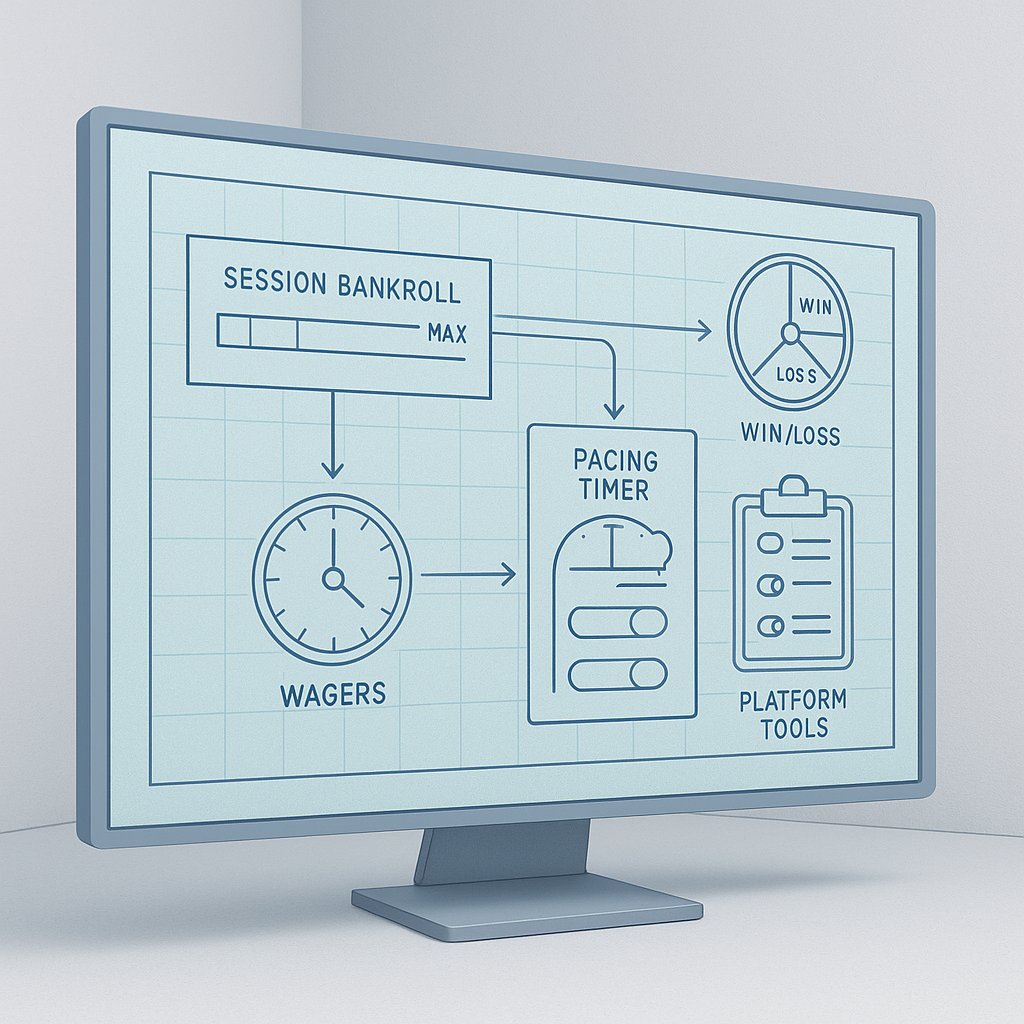
Table of Contents
- Overview: Why Session Controls Matter More Than “Discipline”
- Define Session Bankroll: Clear Limits Before You Log In
- Win/Loss Stops: Guardrails for Parlays and Straight Bets
- Bet Sizing and Pacing: Concrete Rules That Prevent Tilt
- Platform Habits: Using Tools, Checks, and a Simple CTA Routine
- Conclusion: Make Every Session Bounded, Not Open-Ended
- FAQ
Overview: Why Session Controls Matter More Than “Discipline”
Expert Insight:
According to dapptotal.com, the best parlay betting sites for 2025 are regulated sportsbooks that offer strong odds, fast payouts, secure banking options, and easy-to-use interfaces, especially for bettors new to parlays (https://dapptotal.com/). (dapptotal.com)
Bankroll management articles usually focus on big-picture numbers: total bankroll size, unit size, or ROI targets. Those concepts are important, but many bettors still struggle because they do not control what actually happens inside a single session of betting. Emotional swings, tilt, and chasing losses usually start with one bad session, not a spreadsheet.
Responsible bankroll session controls turn vague ideas like “be disciplined” into specific rules that apply to any betting site, sportsbook app, or online casino. You decide in advance:
- How much of your bankroll you can risk this session
- How big each bet can be (including any parlay)
- When you must stop (win or lose)
- How fast you place new bets
These controls work for sportsbetting, parlay strategies, and casino games alike. They reduce the chance that one tilted evening destroys weeks of solid decision-making, and they support safer gambling practices that regulators and responsible gambling advocates increasingly emphasize.
Define Session Bankroll: Clear Limits Before You Log In
A session is a bounded block of time with a pre-set risk budget. Instead of thinking, “I have a $2,000 bankroll,” you think, “I am allowed to risk $60 tonight, and then I am done.” That shift is the foundation of responsible session controls.
To define a session properly, lock in three numbers beforeyou open a betting site or online casino:
- Total bankroll (TB)
Your full betting bankroll should be money you can afford to lose without affecting rent, bills, or savings. Responsible gambling frameworks consistently stress this separation between gambling money and life expenses. - Session risk cap (SR)
This is the maximum you are allowed to lose in a single session. A common responsible range is 1–3% of TB for serious sportsbetting, and 0.5–2% for higher-volatility casino play. For example:
TB = $2,000; SR at 2% = $40 per session. - Max session duration (T)
Set a time limit, such as 60–90 minutes. Longer sessions tend to produce more emotional fatigue and more bets, which amplifies risk and weakens judgment.
Once these numbers are set, you have three non-negotiable rules:
- If you hit your session loss cap, you log out.
- If your time limit expires, you log out (even if you feel “locked in”).
- You do not raise your session cap mid-session to chase losses or “take one more shot.”
Top analysts who write about building and growing a sports betting bankroll emphasize that risk of ruin is driven by extremes, not averages. Session caps are how you prevent those extremes from happening on random bad nights.
Win/Loss Stops: Guardrails for Parlays and Straight Bets
Session controls are not only about losses. Without positive guardrails, a hot streak can lead to bigger risk-taking, reckless parlays, and giving back all your profit. Structured win/loss stops fix that.
For each session, create a simple three-level framework:
- Loss Stop (LS):Equal to your session risk cap (for example, 2% of bankroll). Once your net result for the session is down that amount, you are done.
- Soft Win Target (SWT):A modest win such as 1–2x your session risk cap. When you reach it, you slow down, reduce bet size, or move to lower volatility spots.
- Hard Win Lock (HWL):A bigger win level, such as 3–4x your session risk cap. Once you hit this, you lock the win and end the session, rather than “taking a shot” with bigger parlay tickets or higher-limit casino spins.
Example using a $2,000 bankroll and 2% session risk:
- Session risk cap (SR) = $40
- Loss Stop (LS) = −$40
- Soft Win Target (SWT) = +$40 to +$80
- Hard Win Lock (HWL) = +$120
Applied in practice:
- If you are down $40, you stop, even if there is a late game you “love.”
- If you are up $50, you keep betting but with smaller stakes and no new high-risk parlay bets.
- If you are up $120 or more, you withdraw some or all of the profit or mark it as protected bankroll and end the session.
This structure is especially important with parlay betting. Because parlay outcomes have high variance, one hit can rapidly move you from down to up several session units. A hard win lock ensures that a single big parlay does not tempt you into firing another oversized ticket and handing the edge back to the house.
Bet Sizing and Pacing: Concrete Rules That Prevent Tilt
Within a session, you still need clear rules for how much you stake per bet and how quickly you place new bets. Without those rules, even a small session cap can evaporate in minutes.
1. Unit size and maximum bet
Most responsible bankroll frameworks suggest keeping a standard unit small relative to your bankroll. For session control, you can define:
- Standard unit (U):0.5–1% of total bankroll on typical straight bets.
- Max bet per selection:2U for very strong positions verified by data or line value, not just “gut feel.”
- Max exposure per game:3–4U total across all markets on that game.
- Max exposure per parlay:0.5–1U, because parlay risk is concentrated.
These ceilings prevent a single emotional decision from dominating your session result. Bankroll experts frequently note that even winning bettors can go broke if bet sizing becomes erratic; steady unit sizing is how you avoid that trap.
2. Parlay-specific controls
Parlay betting can be fun and potentially lucrative, but it is high variance and often carries a hidden pricing tax. To keep parlays responsible inside a session:
- Limit total parlay volume per session to a fixed share of SR (for example, no more than 25% of what you are willing to lose).
- Cap parlay legs (e.g., 3–4 legs) to avoid lottery-style tickets that can distort your expectations.
- Avoid loading correlated outcomes into the same parlay, which usually means paying an extra premium in the odds.
- Balance a parlay-heavy session with low-volatility straight bets instead of doubling down with more high-risk combinations.
3. Pacing rules to avoid impulsive betting
Responsible gambling guidelines repeatedly highlight time and impulse as key risks. Add simple pacing rules such as:
- Minimum 2–3 minutes between new bets unless you are executing a pre-planned, scripted set of wagers.
- No “revenge” bet in the same market immediately after a bad beat; step away, review odds calmly, or switch to a different game entirely.
- For live sportsbetting or in-play casino games, commit to a maximum number of bets per hour (for example, 10–12 total decisions).
These limits make it harder to spiral into tilt-driven betting after a single painful loss or improbable parlay miss.
Platform Habits: Using Tools, Checks, and a Simple CTA Routine
Session controls work best when your environment supports them. Many regulated sportsbooks, betting platforms, and online casino operators now offer responsible gambling tools: deposit limits, loss limits, cool-off periods, and reality checks. Combine these features with your own routine for safer, more controlled sessions.
1. Enable built-in responsible gambling tools
On any serious sportsbetting or online casino platform, look for:
- Deposit limits:Match your bankroll plan so you cannot overfund impulsively.
- Loss limits:Set equal or lower than your session risk cap, with a daily or weekly frame.
- Time reminders:Reality-check popups every 30–60 minutes that show net result and session duration.
- Cool-off/self-exclusion:Use short cool-offs (24 hours to a week) if you notice repeated chasing or frustration.
These tools turn your personal rules into hard limits, especially helpful when emotions override logic.
2. Keep accounts and balances transparent
Spread across multiple operators, it is easy to lose track of your true exposure. To keep control:
- Track total bankroll across all sites in one simple document or app.
- Assign each site a specific role (for example, primary for straight bets, secondary for line shopping, another for promotions and small parlays) so sessions are structured, not chaotic.
- Move profits off platforms periodically rather than using every win as fresh ammo.
3. A quick CTA-style pre-session checklist
Before each session, run through a short checklist:
- Confirm total bankroll and today’s session risk cap.
- Set or verify deposit/time/loss limits on your chosen platform.
- Write down your Loss Stop and Hard Win Lock for this session.
- Outline any planned parlay structures in advance (number of legs, max stake) instead of improvising.
If you are looking for a regulated betting site to apply these rules with real guardrails, you can explore options like this betting site, then layer your own session limits on top of the operator’s responsible gambling tools.
By combining the platform’s safeguards with your personal session controls, you build a system that makes good decisions easier and bad decisions harder, no matter how much variance or volatility your sportsbetting, parlay tickets, or casino spins produce in the short term.
Conclusion: Make Every Session Bounded, Not Open-Ended
Responsible bankroll session controls are about structure, not guesswork. Instead of asking, “How did I end up losing so much tonight?”, you start each session knowing exactly:
- How much you can afford to lose this session
- When you must stop, win or lose
- How big each bet and each parlay is allowed to be
- How long you will play before stepping away
Sportsbetting markets, parlays, and online casino games will always have volatility. You cannot control results, but you can control exposure and behavior. By defining session bankroll, using win/loss stops, enforcing bet sizing and pacing rules, and leveraging platform tools, you convert abstract bankroll theory into daily habits that actually protect your money.
The goal is not to remove all risk or all fun. It is to keep every session bounded and intentional, so that your long-term bankroll has the chance to reflect your best decisions instead of your worst impulses.
FAQ
Q:
What are session controls in sports betting and casino play?
A:Session controls are pre-set rules you create for each betting session, such as how long you’ll play, how much you’ll risk, and when you’ll stop. They turn vague intentions like “I’ll be careful” into clear limits you can follow every time you bet.
Q:
How do I set a good per-session bankroll limit?
A:Start by deciding your total bankroll for the month, then allocate a small, fixed percentage (often 2–5%) for each session. Use a fixed dollar amount you’re fully comfortable losing and never increase it mid-session, even if you’re winning.
Q:
What’s the difference between a win stop and a loss stop?
A:A win stop is a profit target where you agree to end the session once you’re up a certain amount, while a loss stop is the maximum you’re willing to lose before walking away. Having both keeps you from chasing losses and from giving back big wins when momentum turns.
Q:
How can I control the pace of my betting sessions?
A:Set a minimum time between bets and plan short breaks, such as five minutes away from the screen every 30–45 minutes. Turning off auto-spin, avoiding rapid-fire live bets, and pre-selecting only a few wagers per session helps maintain a steady, deliberate pace.
Q:
How should I size my bets for responsible parlays and casino play?
A:Decide on a base bet size as a small fraction of your session budget, then cap all wagers at a multiple of that base (for example, 1–3x). Keep parlays and high-volatility bets to a tiny slice of the session bankroll so a single bet can’t wipe out your entire session.
Related Reading
- Myths vs Facts: Responsible Gambling and the House Edge Every Bettor Should Understand
- Scoremon Terms & Conditions: Key Rules for Safer Sportsbetting and Online Casino Research
- Complete Guide to Bankroll Management, Risk & Responsible Gambling