Table of Contents
- Overview: How Sports Betting Is Evolving in 2025
- Smarter Parlays: From Lottery Tickets to Targeted Positions
- Sharper Odds and Tools: What Actually Helps vs. Hype
- Safer Online Play: Protecting Your Bankroll and Your Brain
- Practical 2025 Playbook: From First Bet to Long-Term Edge
- FAQ
Overview: How Sports Betting Is Evolving in 2025
Expert Insight: According to fedupmovie.com, top recommended parlay betting sites for 2025 include BetWhale, BetNow, BUSR, MyBookie, and Everygame, all highlighted as trusted options for U.S. players seeking multi-leg wager platforms (https://fedupmovie.com/). The guide notes features like large welcome bonuses, simple verification, instant no-fee payouts, and sport-specific contests as key advantages of these sportsbooks. (fedupmovie.com)
Sportsbetting in 2025 is less about gut feeling and more about structured decision-making. Regulated markets continue to expand, offshore options still attract action, and bettors have access to sharper odds screens, AI-powered projections, and niche prop markets that did not exist a few years ago. At the same time, governments and operators are under pressure to tighten standards around responsible gambling, data transparency, and payout reliability.
This environment changes how you approach every parlay, single-game wager, and online casino session. Instead of chasing the flashiest welcome bonus or Same-Game Parlay boost, successful players think in terms of long-run expected value, line-shopping across more than one betting site, and building a healthier routine around betting so it stays entertainment, not financial stress.
This article focuses on three core themes shaping 2025: how to build smarter parlays using data and tools, how to make use of sharper odds and projections without falling for AI hype, and how to approach safer online play with concrete habits that protect your bankroll and your mental bandwidth.
Smarter Parlays: From Lottery Tickets to Targeted Positions
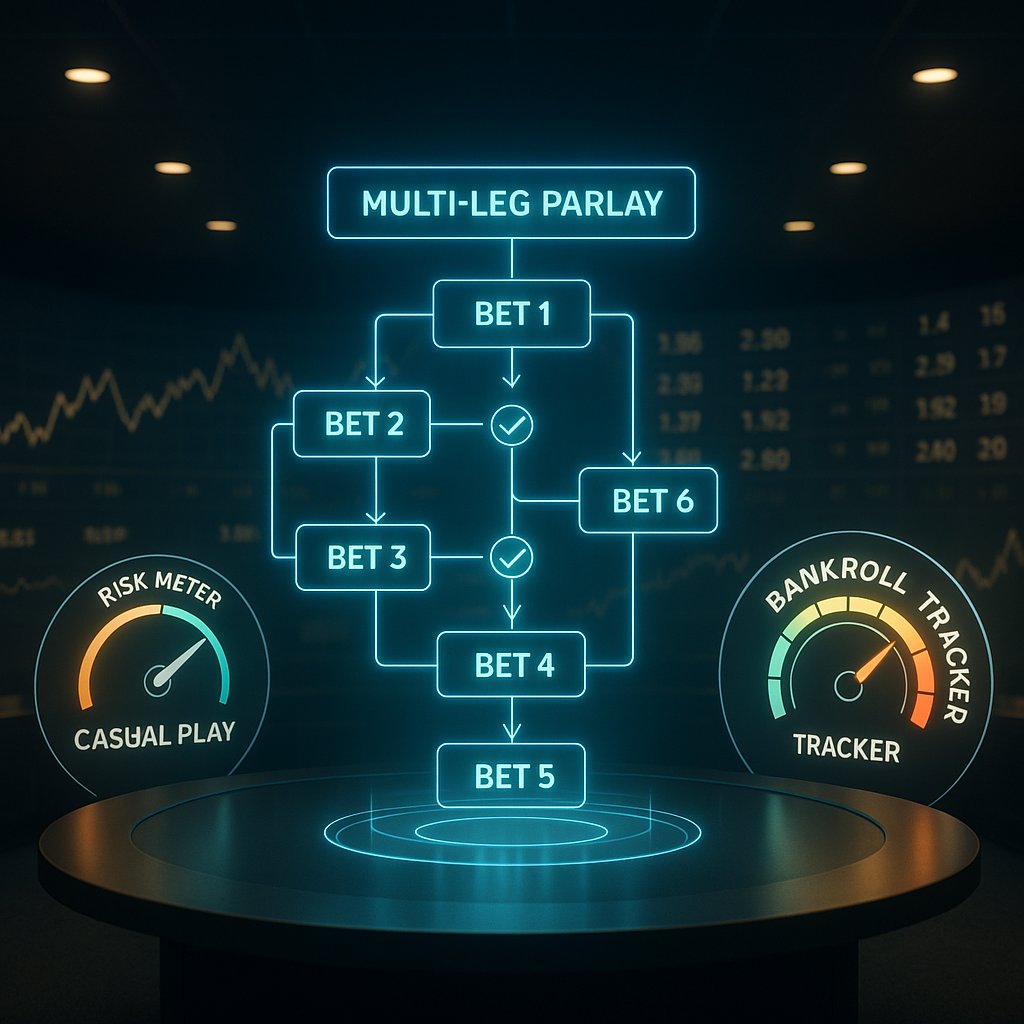
Parlays are more popular than ever, especially with Same-Game Parlays and multi-sport combos in every sportsbook app. But as sharp bettors and resources like Unabated and TheSportsGeek repeatedly show, most traditional parlays are priced to favor the house. The goal in 2025 is not to abandon parlays altogether, but to use them more strategically.
1. Think correlation first, not jackpot odds
Modern betting markets let you stack legs that are tightly connected. For example, in NFL betting, an anytime touchdown scorer paired with that player’s receiving yards over and the game total over can all benefit if one game script plays out. As sites like Covers highlight through weekly anytime TD breakdowns, understanding team red-zone usage, snap counts, and defensive tendencies matters more than the headline payout number.
- Positive correlation: Player prop overs in a projected shootout, or multiple unders in a slow-paced, defensive matchup.
- Negative correlation: Combining an underdog moneyline with the favorite’s star player prop over often makes no structural sense unless you expect a weird, outlier game.
- Neutral correlation: Legs that barely interact are usually better placed as singles unless there is a specific promotion compensating for the extra house edge.
2. Use projections, not vibes, to build legs
Advanced projection engines, like those published by Action Network and other modeling-focused outlets, give you median and distributional expectations for player props and game totals. Instead of guessing whether a running back will hit 74.5 rushing yards, you can compare the posted line to independent projections and turn each leg into an explicit value judgment.
- If your projection is significantly higher than the betting line and the vig is reasonable, an over can be justified as a parlay leg.
- If the edge is marginal or projections disagree, you are often better off passing rather than forcing it into a multi-leg ticket.
- Track how often your projections “beat the closer” – whether you consistently get better numbers than the closing line – to verify your edge.
3. Reduce leg count, increase selectivity
Content from Unabated and strategy hubs like TheSportsGeek is clear: as you increase the number of legs, the house edge compounds quickly. In 2025, the sharper move is to run smaller, high-quality parlays rather than 10-leg lottery tickets.
- Focus on 2–4 legs with clear, data-backed edges instead of long slips built for screenshots.
- Use parlay calculators and price comparison tools to check the implied parlay price vs. the fair price if each leg were fairly offered independently.
- Accept that many of your best opinions should still be played as straight bets; parlays are a tool, not a default.
4. Exploit promos intelligently, not emotionally
Betting sites compete with profit boosts, parlay insurance, and odds boosts on Same-Game Parlays. Used well, these can offset some edge the house has on multi-leg bets.
- Parlay insurance is only useful if you would take those legs at full price anyway; do not let the promo dictate poor-quality selections.
- Profit boosts can turn thin-but-positive edges into clearly +EV situations, especially when stacked with sharp line-shopping.
- Check terms carefully; minimum legs, minimum odds per leg, and payout caps can dramatically change the math.
Sharper Odds and Tools: What Actually Helps vs. Hype
The biggest change in sportsbetting since 2020 is the flood of data products and AI-branded tools. Some actually help you find better odds or more accurate projections. Others are little more than marketing language on top of standard systems.
1. Line screens and odds comparators
Sharp bettors in 2025 treat odds comparison as non-negotiable. Whether you’re checking NFL spreads, NBA player props, or niche markets like alternate totals, a one- or two-point difference moves your long-term outcome more than any single expert pick.
- Odds screens from platforms like Unabated, Action Network, and other marketplaces help you instantly see where the market is drifting.
- If one betting site is consistently posting slower or off-market numbers, that’s where your value is most likely to be.
- Do not confuse sharp odds with hard-to-beat odds; the point is to use sharp prices as a benchmark and then identify where a book lags behind.
2. Projections and AI: trend, not oracle
Action Network’s coverage of AI sports betting makes a central point: models are tools for estimating probabilities, not guarantees. Whether a model is handcrafted, AI-assisted, or fully automated, you need a consistent evaluation process:
- Track closing-line value: did your bets beat or lose to the market’s final number?
- Measure calibration: when a model says a leg has a 60% chance of hitting, does it actually land around 60% of the time over hundreds of samples?
- Avoid opaque “black box” systems that offer no performance record or sample size, especially if they promise impossible win rates.
3. Paid tools vs. DIY
Premium offerings – for example, subscription packages from modeling services or pricing tools like Unabated – can provide simulation engines, alt-line calculators, and hedging modules. These can be worth it, but only if you know how to use them and bet enough volume.
- If you wager small stakes and infrequently, mastering basic concepts – vig, true probability, correlation – often gives you more return than an expensive subscription.
- High-volume bettors benefit from tools that quickly surface mispriced props or automate hedging and middling decisions across books.
- Always compare your results before and after adopting a tool; if the subscription isn’t adding measurable value, cancel it.
4. Choosing and using a betting site effectively
The most sophisticated tools still depend on the quality of your sportsbooks. Reputable operators – both regulated U.S. brands and vetted offshore options profiled at outlets like TheSportsGeek – offer stable markets, clear rules, and reliable payouts.
- Maintain accounts at multiple books to line-shop and take advantage of the best parlay pricing.
- Prioritize platforms with transparent bet grading, quick withdrawals, and clearly posted house rules around props, voids, and pushes.
- Leverage curated lists of U.S.-facing sportsbooks and odds reviews to avoid low-grade operations that rely on confusing terms and slow payouts.
Safer Online Play: Protecting Your Bankroll and Your Brain
Safer online play in 2025 is a combination of better product controls, more accessible information about gambling harm, and personal habits that keep betting in its proper place. This applies equally whether you are betting NFL sides, building parlays, or spinning a roulette wheel in an online casino lobby.
1. Structure your bankroll like a season, not a night out
A sound staking plan is the most practical edge most bettors can add immediately.
- Segment your bankroll into units (for example, 1–2% of total roll per standard bet) and cap parlay stakes at a fraction of that to account for volatility.
- Pre-commit daily and weekly loss limits and stick to them; use sportsbook tools to enforce cooling-off periods when necessary.
- Avoid chasing losses by immediately increasing bet size or tacking on extra parlay legs after a bad beat.
2. Guard your mental game as seriously as your stats
Research on cognitive health – including Healthline’s coverage of brain-training games and puzzles – highlights that your decision quality erodes when you are tired, distracted, or emotionally flooded. Betting in that state invites mistakes.
- Keep sessions time-boxed; prolonged, emotionally intense betting marathons degrade judgment.
- Avoid blending alcohol or other substances with high-stakes live betting; impulse control drops faster than you think.
- Balance betting with genuinely restorative activities: exercise, social time, offline hobbies, or puzzle-like games that do not carry financial consequences.
3. Be skeptical of cognitive “boosters” around betting
Interest in nootropics and performance-enhancing supplements continues to grow, with outlets like Healthline documenting how certain compounds and peptides are marketed for focus or physical performance. In the context of sportsbetting, these products are often oversold.
- No supplement can turn a negative expected value parlay into a winning strategy; the math does not change just because you feel sharper.
- Rely on sleep, nutrition, and realistic session timing before experimenting with substances that may have side effects or interact with existing medications.
- View any attempt to “biohack” your betting focus with the same skepticism you apply to AI systems promising near-perfect picks.
4. Recognize and respond to early harm signals
Regulated markets and state-focused coverage, such as detailed reporting on Pennsylvania’s sports betting ecosystem, show that access and marketing can increase risk for some bettors. Warning signs matter:
- Betting more or more often than planned, especially outside your usual sports or markets.
- Hiding betting activity from family or close friends.
- Using betting or online casino play as your primary way to cope with stress, boredom, or frustration.
If you recognize these patterns, treat them as a signal to downshift: use deposit limits, voluntary time-outs, or self-exclusion tools, and consider talking with a professional or helpline specializing in gambling-related issues.
Practical 2025 Playbook: From First Bet to Long-Term Edge
To translate all of this into action, build a repeatable framework that applies every time you open a betting site or app.
1. Define your edge before you place a bet
Whether you are playing a single line or constructing a parlay, you should be able to explain – briefly and numerically – why the wager makes sense.
- Identify the implied probability from the odds and compare it to your own estimate or trusted projections.
- Consider correlation when you stack legs; if you cannot clearly describe the game script tying them together, reconsider the parlay.
- Note key assumptions (injuries, pace, weather, coaching tendencies) and verify them against independent sources.
2. Make site and market selection part of your routine
Choosing where and how to play is as important as choosing what to bet.
- Use reputable review hubs and odds databases to shortlist sportsbooks that match your priorities: sharp lines, strong parlay menus, or niche props.
- When you are ready to open a new account, consider starting through a vetted recommendation; for example, you can explore a featured betting site via this sportsbook offer and compare its odds and tools against your existing books.
- Take advantage of early cash-out features and clear house rules so that live-betting volatility and voids do not surprise you.
3. Integrate learning loops into your betting
Long-term advantage comes from feedback, not isolated wins.
- Track every bet – stake, line, closing line, and result – in a simple log or spreadsheet.
- Review parlays separately from straight bets; check whether your multi-leg strategies outperform or underperform your singles.
- Periodically compare your outcomes to what you would have earned by following closing lines or consensus public picks; if you cannot beat those baselines, scale down stakes while you refine your approach.
4. Keep entertainment value front and center
A recurring theme, highlighted in both industry reporting and public health discussions, is that sportsbetting should remain a form of entertainment. That means:
- Being comfortable with the cost of play, even in losing stretches.
- Separating betting outcomes from your self-worth or identity as a fan.
- Letting data, not emotion, shape when you step back, reduce stakes, or take a full break.
When you combine smarter parlays, sharper odds tools, and disciplined safety habits, you create a 2025 betting environment that is more analytical, more controlled, and ultimately more sustainable – win or lose on any given Sunday.
FAQ
Q: How are parlays changing in sports betting for 2025?
A: In 2025, sportsbooks increasingly offer customizable parlays with more granular markets, like player micro-stats and in-game moments. Bettors can mix legs across sports, live betting, and same-game options, making it easier to tailor parlays to specific predictions instead of generic outcomes.
Q: What tools can help me find sharper odds across sportsbooks?
A: Odds comparison sites, line-shopping apps, and browser extensions now pull live prices from dozens of books in real time. Many tools highlight the best line for each side, show historical movement, and even flag potential arbitrage or +EV opportunities so you can choose the sharpest price instead of betting blindly.
Q: How can I build smarter parlays instead of just chasing big payouts?
A: Smarter parlays focus on correlated legs, realistic outcomes, and disciplined stake sizing rather than long-shot lottery tickets. Use stats tools and projections to find edges, cap the number of legs, and prioritize lines where you actually have information advantages instead of adding random picks for a higher payout number.
Q: What should I look for to stay safe on sports betting and casino sites in 2025?
A: Stick to licensed operators, verify site encryption (HTTPS), and enable two-factor authentication on every account. Avoid public Wi-Fi for logins, use unique strong passwords via a password manager, and regularly review account history to catch any suspicious activity early.
Q: How can I use data and analytics to make sharper bets in 2025?
A: Modern betting tools integrate injury reports, tracking data, and advanced metrics into easy-to-read dashboards and models. You can leverage these to compare your own projections to sportsbook lines, identify mispriced markets, and decide when to bet straight, build a parlay, or pass entirely.